




In a world increasingly shifting toward clean beauty and chemical-free products, the age-old debate of organic henna powder vs. chemical dye has resurfaced with renewed interest. Whether you’re aiming to colour your greys, enrich your natural tone, or simply treat your hair to something healthy, understanding the pros and cons of both options is crucial.
This comprehensive guide will help you explore the science, safety, benefits, and long-term effects of both organic henna powder and chemical dyes, so you can make the best choice for your hair and scalp health.
What Is Organic Henna Powder?
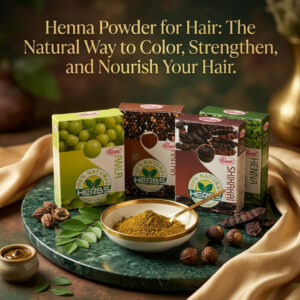
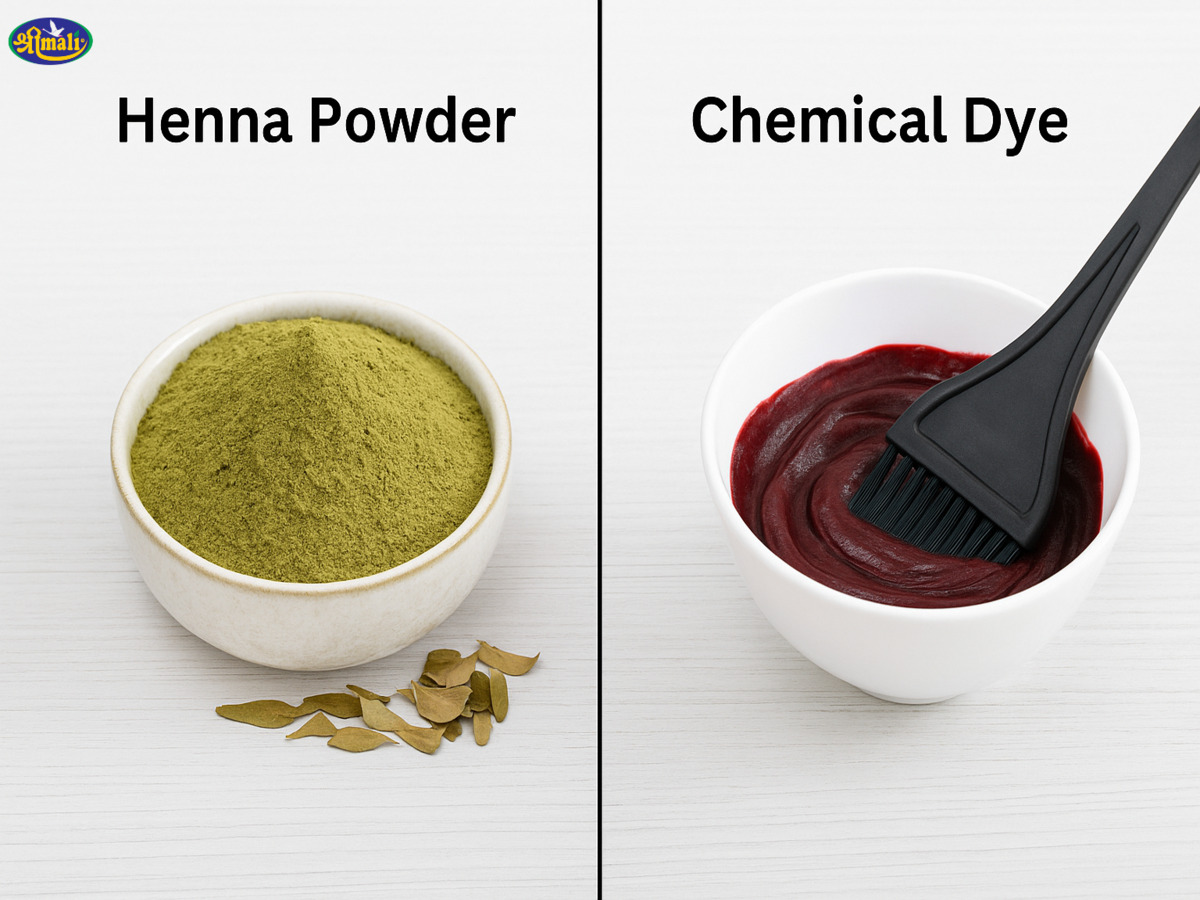
Organic henna powder is derived from the dried leaves of the Lawsonia inermis plant. Grown without synthetic fertilisers or pesticides, it’s known for being a chemical-free henna for hair. The natural dye compound—lawsone—binds with hair proteins, giving it a reddish-orange tint.
Unlike chemically treated colours, this natural alternative conditions the hair, strengthens the shaft, and is free from ammonia, PPD, and parabens.
What Are Chemical Hair Dyes?
Chemical dyes are synthetic formulations that contain a mix of ammonia, hydrogen peroxide, and colouring agents like p-phenylenediamine (PPD). These agents open the hair cuticle and allow pigments to penetrate, providing a broader range of colour options from blondes to blacks and vibrant shades.
However, chemical dyes often compromise hair health in the long run and may trigger allergies, dryness, or breakage.
Comparing the Composition: Nature vs. Lab
| Feature | Organic Henna Powder | Chemical Dyes |
|---|---|---|
| Ingredients | Plant-based, herbal | Synthetic chemicals |
| PPD/Ammonia | No | Often present |
| Colour Options | Limited (reds, browns) | Wide variety |
| Longevity | Gradual fading | Lasts longer, but fades harshly |
| Scalp Safety | High | Medium to low |
When you opt for natural henna hair dye, you’re choosing a composition that blends seamlessly with the biology of your hair. On the other hand, chemical dyes use strong formulations that forcibly alter your hair’s structure.
Application & Results
Organic Henna Powder:
Using organic henna involves creating a paste with warm water, sometimes adding natural boosters like lemon juice or tea. Application requires keeping the paste on for 2–4 hours and then rinsing off. The result is a rich auburn or brown tint depending on your natural hair colour.
One of the key benefits? You get shiny and strong hair—an effect that’s not just visual but deeply nourishing.
Chemical Dye:
Chemical hair dye application is quicker—usually 30–45 minutes. It requires mixing developers and colours, applying evenly, and washing off. The colour results are predictable, bold, and long-lasting.
However, frequent usage often leaves the hair feeling brittle and dry.
The Benefits of Organic Henna Powder
1. Scalp Health
Organic henna contains antimicrobial and antifungal properties. It’s ideal for people with dandruff or an itchy scalp. Moreover, the lack of chemicals ensures zero scalp irritation—a rare claim for synthetic alternatives.
2. Natural Conditioning
It works as a deep conditioner. Many who use chemical-free henna for hair report smoother strands, fewer split ends, and visibly reduced frizz.
3. Strength & Shine
Regular application ensures henna for shiny and strong hair. The lawsone molecule binds with keratin, strengthening each strand from root to tip.
4. No Side Effects
Allergic reactions from pure henna are extremely rare. If you’re switching from chemical dyes due to scalp burns or itchiness, henna offers a safe and soothing transition.
Risks of Chemical Hair Dyes
While the colour payoff might be superior, chemical hair dyes come with risks:
- Allergic reactions and skin irritation
- Hair breakage and loss with repeated use
- Premature greying with long-term application
- Hormonal disruptors found in certain PPD compounds
This makes the shift to henna hair dye a conscious choice for both safety and sustainability.
Colour Variety & Customisation
Henna:
On its own, henna imparts an orange-red shade. However, it can be blended with:
- Indigo for browns and blacks
- Amla for cooling effects
- Hibiscus for deep burgundy tones
These combinations still qualify as chemical-free henna for hair, keeping the integrity of your hair intact.
Chemical Dye:
You get a vast colour palette—from icy blondes to pastel pinks. But this customisation comes at a cost—both financially and in terms of hair health.
Sustainability & Environmental Impact
Organic henna powder is biodegradable and sourced sustainably. It supports local farmers and doesn’t pollute water systems post-use.
Conversely, many chemical dyes include heavy metals and toxins that negatively impact waterways and marine ecosystems. The packaging and by-products contribute to long-term
Who Should Use What?
| Hair/Scalp Condition | Ideal Choice |
|---|---|
| Sensitive scalp | Severe greying |
| Hair fall / brittle hair | Natural Henna Hair Dye |
| Long-term hair health | Organic mehndi for hair |
If your priorities are shine, strength, and nourishment, henna for shiny and strong hair is your best bet. However, for instant and vibrant transformations, you may choose chemical dyes cautiously.
Tips for First-Time Henna Users
- Always do a patch test—even natural products can cause rare allergies.
- Mix henna in iron vessels for deeper tones.
- Avoid shampooing for 48 hours after application.
- Use natural oils post-henna for additional softness.
By doing this, you’ll experience Herbal henna for strong hair without the drawbacks of synthetic alternatives.
Where to Buy Organic Henna Powder?
When purchasing, ensure:
- The pack says “100% pure henna” or “Certified Organic”
- Ingredients list contains Lawsonia inermis only
- No added fragrance or PPD
Fine texture and earthy scent
Final Verdict: Which One Should You Choose?
Organic products is the clear winner when it comes to scalp safety, hair strength, eco-friendliness, and holistic beauty. For those desiring intense, fashion-forward shades, chemical dyes offer instant gratification—but at the cost of long-term health.
If your focus is Organic mehndi for hair that restores and maintains natural beauty, then henna is not just an option—it’s the answer.
Conclusion
Choosing between organic henna powder and chemical dyes is about aligning your hair goals with your health values. While both have their place, the benefits of natural henna hair dye—including henna for shiny and strong hair—are hard to overlook in today’s clean beauty era.
Faq's
Can organic henna cover grey hair effectively?
Yes, organic henna can cover grey hair, especially when combined with natural additives like indigo for darker tones.
How long does the colour from organic henna last?
The colour typically lasts 4–6 weeks, fading gradually. Unlike chemical dyes, it doesn’t cause harsh regrowth lines or colour damage.
Does henna work for all hair types?
Yes, organic henna suits all hair types—curly, straight, thick, or thin. It even helps improve texture over time.